AI in HR: Innovation meets Regulation
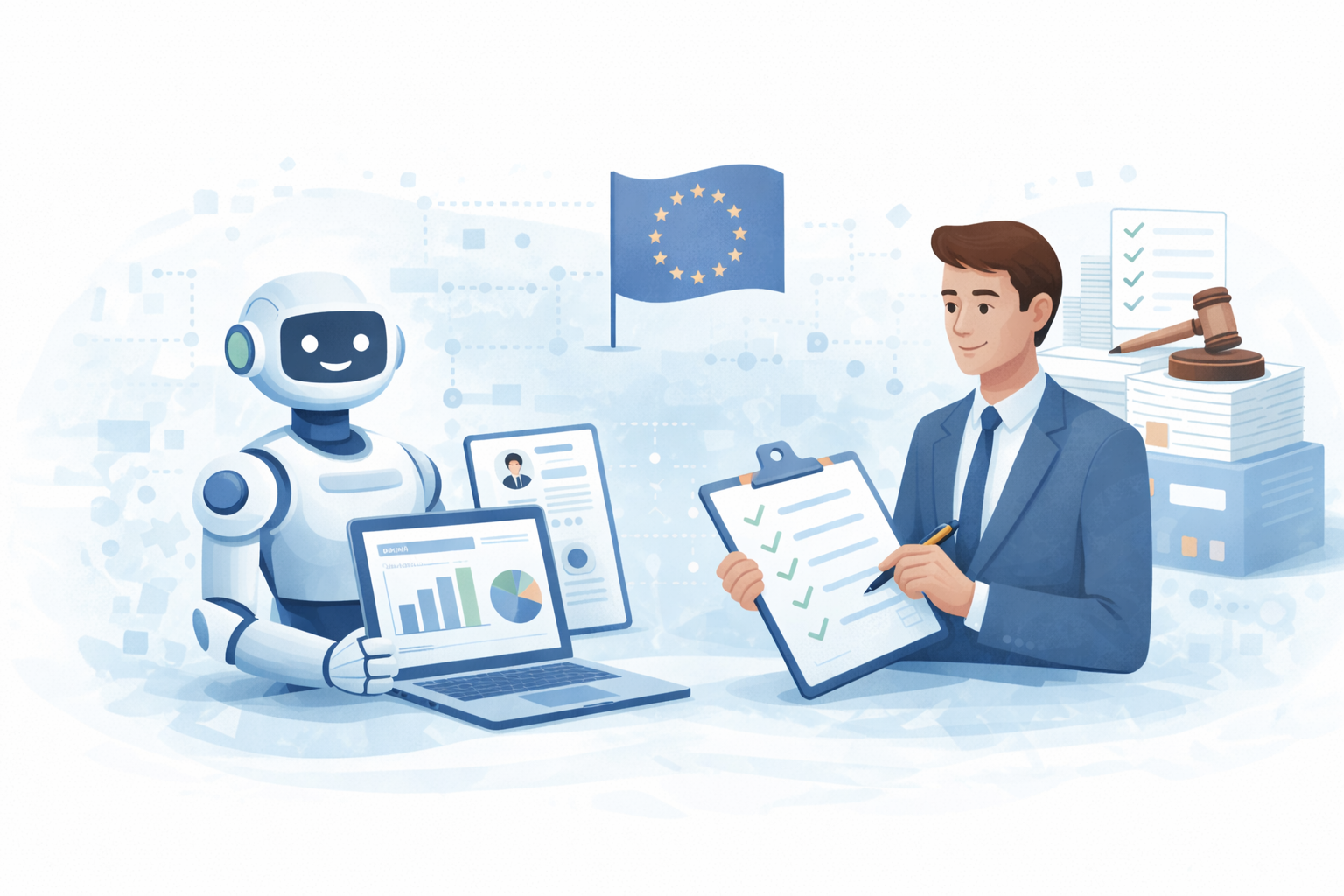
AI is rapidly transforming HR.
But it is no longer just about efficiency or innovation.
From recruitment to employee management, organisations are exploring how AI can improve processes, support decision-making, and streamline operations.
This is real innovation.
But there is an important shift that needs to be understood.
With the establishment of the EU AI Act in 2024, AI in HR is no longer only a technology topic.
It is also a regulatory topic.
Why HR is in Focus
HR processes directly impact people.
They influence:
who gets hired
how employees are evaluated
how careers develop
how decisions are made across the employee lifecycle
Because of this, AI used in HR is classified as high-risk under the EU AI Act.
This does not limit innovation.
But it defines how innovation must be applied.
What High-Risk AI Means in Practice
For organisations operating in the EU, using AI in HR requires:
Human oversight
Explainable outcomes
Documented and auditable processes
Active management of risks such as bias
For example, using AI to automatically screen and reject candidates based on CV analysis already falls into this category.
This leads to a clear implication:
Fully automated HR decision-making using AI is not aligned with these requirements.
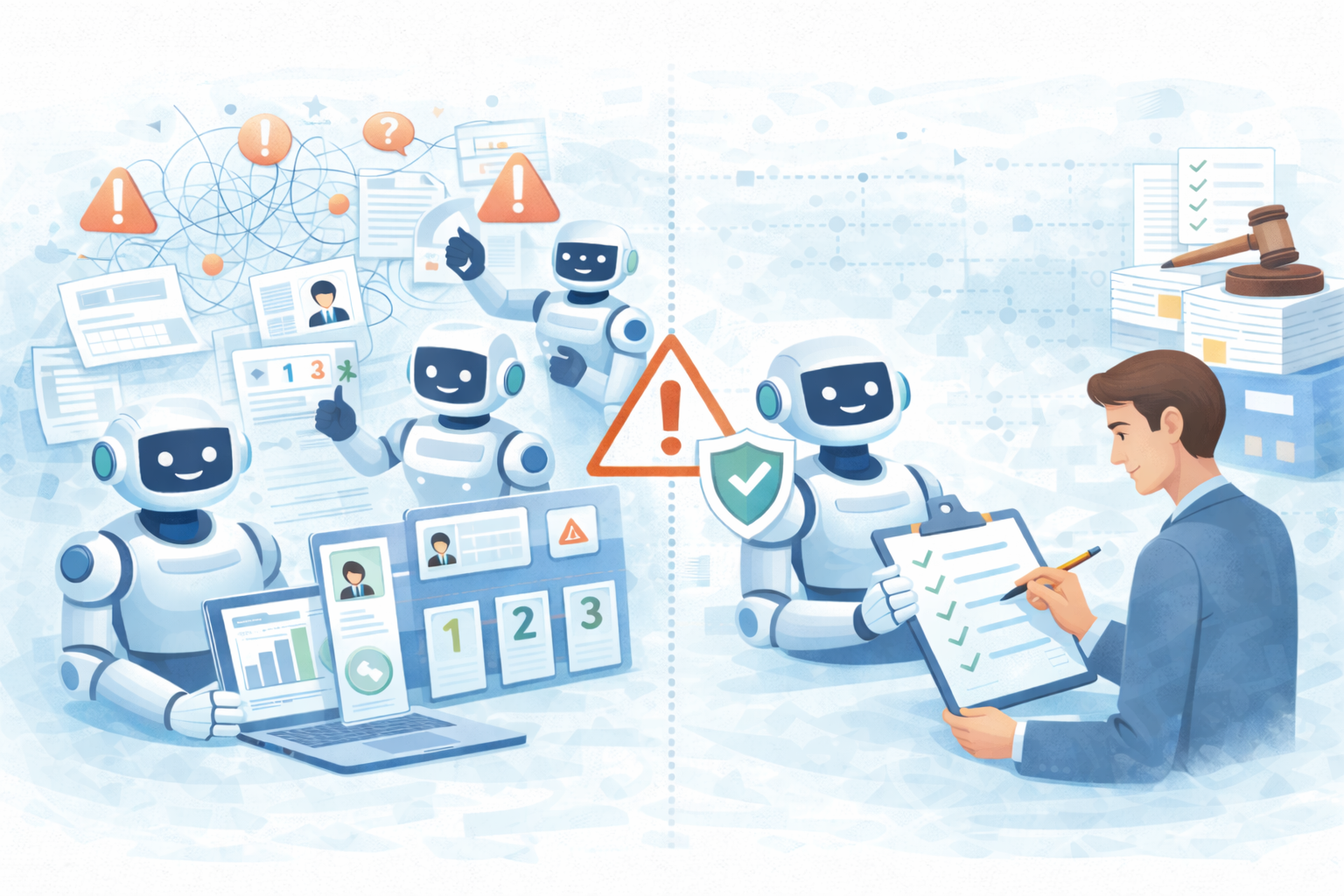
Innovation Without Control Creates Risk
There is a growing narrative that HR processes can be largely automated through AI agents.
While these approaches demonstrate what is technically possible, they often operate without the level of control and accountability required in HR.
They tend to overlook:
accountability for decisions
transparency towards candidates and employees
the ability to explain outcomes
In practice, this can result in automation without sufficient control.
The challenge is not building more AI.
It is using AI in a way organisations can explain and stand behind.
Beyond the EU: A Direction Becoming Standard
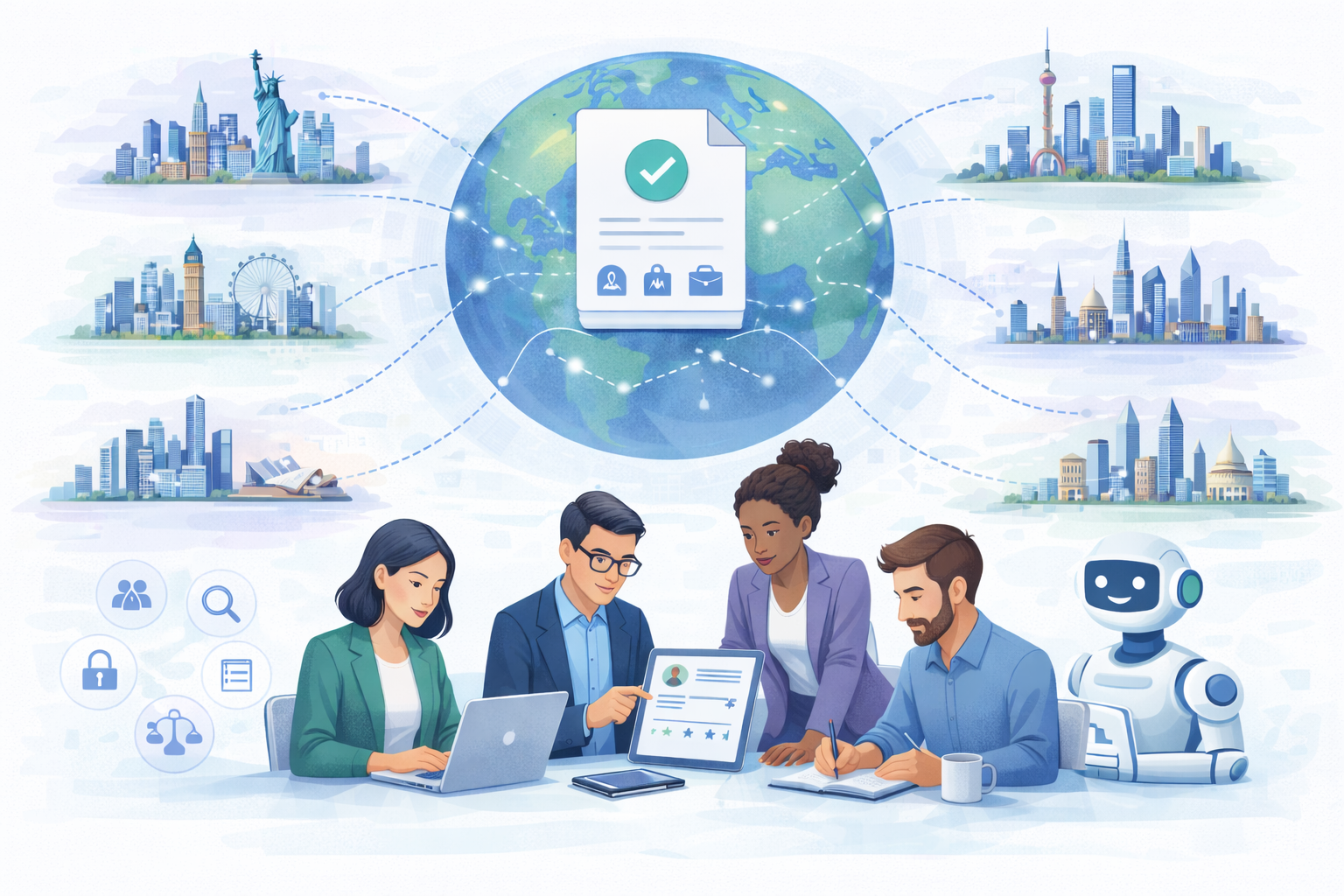
The EU AI Act is currently the most comprehensive framework.
But it reflects a broader global direction.
Across regions, we already see increasing focus on:
data protection
fairness and non-discrimination
responsible use of AI
This is similar to how data protection evolved, where regional regulations eventually shaped global operating standards.
Over time, these principles are likely to become standard expectations across countries, not just within the EU.
A More Sustainable Approach to AI in HR
This does not mean organisations should slow down their AI adoption.
It means they need to approach it differently.
AI can deliver strong value when used with the right structure.
A sustainable approach focuses on:
AI supporting decisions, not replacing them
Clear validation by HR and managers
Transparent and controlled processes
Defined governance and accountability
This allows organisations to innovate while maintaining trust and compliance.
What This Means for Organisations
AI in HR is both an opportunity and a responsibility.
It is innovation.
But it is also regulation.
Organisations that recognise both dimensions early will be better positioned to scale their HR processes in a way that is not only efficient, but also sustainable and compliant in the long term.